
Why Most Businesses Are Getting IT Security Completely Wrong (And How to Fix It)
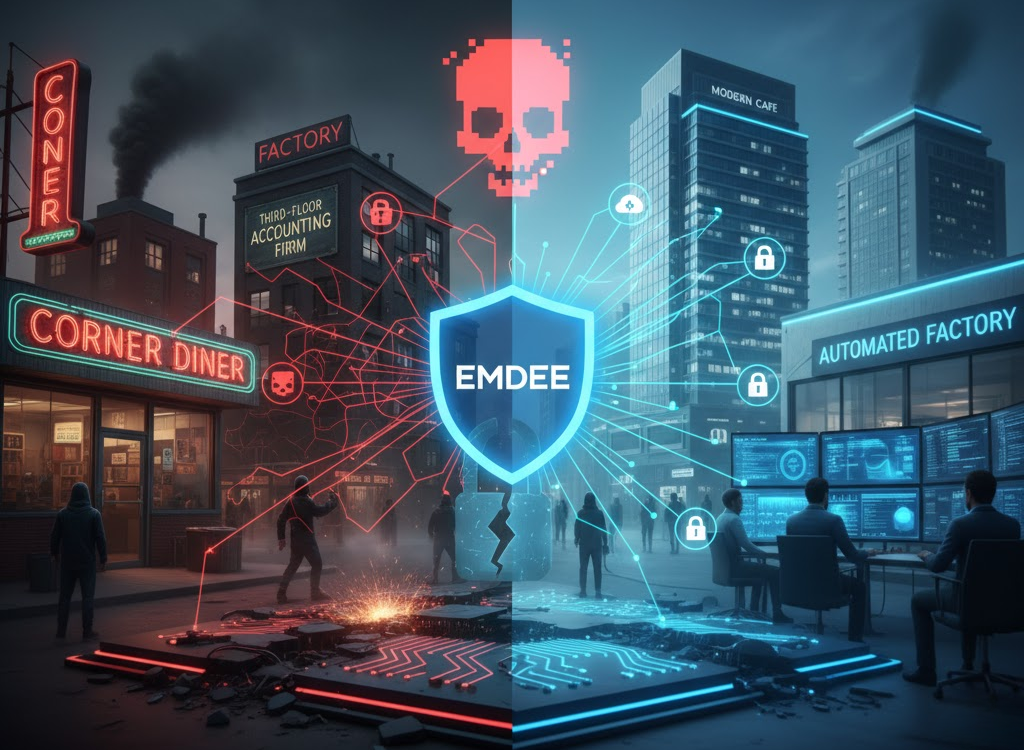
There is a dirty little secret in business that nobody is talking about. Companies are getting hacked every single day. Not only the big players that get reported on—although plenty of those as well—but ordinary businesses just trying to keep their doors open. The diner on the corner, the third-floor accounting firm, the factory on the outskirts of town. They’re all considered vulnerable, and many of them have no idea just how exposed they are. The issue isn’t that business leaders don’t care about security. They do care. The issue is that the cybersecurity world has grown so ridiculously convoluted that it seems impossible to make the correct choices.
Here’s what really goes down in the real world: A business concludes they need more security. Perhaps they had a near-miss, or perhaps their insurance provider demanded it, or perhaps they read one too many scary news stories. So they begin researching **IT security solutions**, and are immediately paralyzed. Do they hire someone? Purchase software? Both? Which software? There are about seven million choices, and every one is promising to be absolutely critical. The research process alone might be a full-time endeavor.
The Real Cost of Getting Hacked
Let’s be real about what occurs when security breaks down. Put the tech talk aside for a moment and consider the true human effects. Imagine this situation: A team member clicks what appears to be a legitimate email from a supplier. It appears innocent enough—an invoice to review, perhaps a delivery notice.
Customer information, financial data, project documents, the works. The attackers issue a demand for payment—typically in cryptocurrency, typically significant—with an ultimatum. Pay or lose it all forever. And, by the way, they’ve likely already taken sensitive data to their own servers, so even if payment is made, there can be future opportunities for extortion.
Now increase that stress by each and every individual within the organization. Work comes to a standstill. Phones ring with irate customers who can’t get their service. Partners and vendors want to know if their information was hacked. Legal requirements come into play—depending on the industry and what information was leaked, there could be required breach notifications, regulatory inquiries, possible lawsuits. The local news may carry the story. Social media broadcasts everything.
The financial loss goes well beyond the cost of any ransom paid. There’s the expense of forensic analysis to determine what occurred and how. There’s downtime and lost productivity. There’s the cost of notifying those involved and possibly attorneys’ fees for credit monitoring. There’s attorney fees. There’s the mandatory upgrades to those systems that should have been done in the first place. And then there’s the reputational loss, less tangible to put a number on but possibly catastrophic. Some businesses never recover.
What Actually Works in the Real World
Good security isn’t a matter of spending the most money on equipment or using every available control. It’s a matter of knowing particular threats and dealing with them in a systematic way by using the right controls. This means taking a cold-eyed look at what really matters. What information would be damaging if disclosed? What systems are essential to operations? Who requires access to what? Where are the vulnerabilities?
Begin with the fundamentals, because the fundamentals remain immensely important. Good passwords and multi-factor authentication prevent a large percentage of attacks from even beginning. The majority of breaches take advantage of stolen or compromised credentials—making it more difficult for attackers to leverage credentials even if they get them removes an entire class of threats. But many organizations still have poor password policies and have not put multi-factor authentication everywhere. It’s low-hanging fruit that offers great protection.
The catch is regularly testing those backups to make sure they really function. Far too many businesses find themselves in an emergency situation and find out that their backup routine was faulty and the information cannot be recovered. That’s a worst-case nightmare.
Detection and monitoring capabilities dictate the speed at which organizations can detect and respond to threats. The distinction between detecting a breach in minutes or months is typically the distinction between a slight incident and total disaster. This necessitates real-time log analysis, network traffic, endpoint activity, and user activity. Advanced attacks attempt to mask themselves among everyday business, making it difficult to detect without top-shelf analytics and threat intelligence.
This is exactly where IT security management services excel. Economies of scale—tools and expertise to secure a single client are applied to many clients—give professional-grade security to organizations that could never possibly develop similar capabilities in-house.
The Mid-Market Dilemma
Mid-tier companies struggle with special challenges. They’re too big for fundamental, off-the-shelf security measures to suffice, but too small for it to be worth creating enterprise-grade security functions in-house. There’s been enough growth in revenue so that they’re interesting targets for advanced attackers, yet security budgets haven’t increased accordingly. Compliance obligations might have triggered as business grew into new geographies or sectors, bringing associated regulatory complexity without matched security investment increases.
The talent gap hits mid-sized organizations the hardest. Qualified security professionals are in great demand and receive premium pay. Losing one or two star performers causes critical gaps in knowledge and operations.
Technology choices become increasingly complicated at this level. Consumer-level solutions won’t do, but enterprise-class platforms for Fortune 500 organizations might be too much—both in terms of expense and complexity. Achieving the proper balance means wending one’s way through a bewildering market where vendors are not always clear about which products really do fit which business types.
This is where small and mid-sized business IT security solutions must be specially designed and not merely scaled-down versions of enterprise products. These businesses require protection that is truly enterprise-grade in terms of performance but provided in forms that take into consideration smaller teams, tighter budgets, and operational limitations. They require solutions that can scale with the business and not need to be completely replaced every few years as the business grows.
Cloud-based security solutions have made possibilities unavailable ten years ago available today. Organizations today can leverage advanced capabilities through models of service that were only accessible to enterprises with huge capital budgets for infrastructure and software. Security operations that used to necessitate specialized on-premises hardware and a lot of technical skill can now be provided as a service, with the service provider maintaining the technical complexity while the customer enjoys the protection.
Integration Is More Important Than Anyone Will Admit
The worth of IT and security solutions that play well together cannot be overemphasized. When endpoint protection, network monitoring, identity management, and other security elements exchange data and collaborate on responses, the sum is greater than its parts. An endpoint identifying suspect activity can initiate network-level quarantine. Identity systems can ask for extra authentication when access patterns appear suspicious. Security data goes where it’s required, making it possible to detect threats more quickly and more accurately.
This integration goes beyond security tools to include overall IT operations. Security that gets in the way of operational needs creates friction and workarounds, which always introduce new vulnerabilities. Development teams operating under time constraints may circumvent security controls that hold them up. Users may share credentials to circumvent authentication steps they find frustrating. Shadow IT occurs when formal systems are locked down too much to accommodate legitimate business needs. The answer is not to remove security controls but to apply them in a manner that enhances productivity instead of inhibiting it.
Selecting Partners Carefully
Not every IT security solutions company and the vendor is the same, and choosing an ill-suited partner is worse than none at all. The wrong vendor may give an organization false security while providing subpar protection. Or they may be technically proficient but awful communicators, so clients have no idea what their true security situation is. Or they may be excellent in the beginning but incapable of growing their services as client requirements change.
Experience in the same context is crucial. A financial services provider with a great deal of experience defending healthcare entities is well-versed in HIPAA mandates and familiar with what attackers against medical data appear like. A financial services provider knows the regulator environment and attackers unique to that space. Although security principles are universal, the nuances of execution and the types of threats encountered differ dramatically. Experience in the proper context directly equates to improved defense and fewer expensive errors.
Transparency distinguishes good providers from average ones. Security is multifaceted and threats constantly change—no provider can promise ideal protection. But good providers are frank about limits, explain risks candidly, and frame their suggestions in business terms without hiding behind technical mumbo-jumbo. They should be prepared to articulate methodologies, give notice of tools and processes, and offer unambiguous reporting on posture and incidents.
Conclusion
For expanding companies finding that challenging sweet spot between fundamental safeguards and enterprise-level security, Emdee offers small and mid sized company IT security solutions that bring advanced protection without necessitating gargantuan internal resources. The strategy grows organically as companies expand, avoiding the disruptive replacements that curse companies exceeding their original security deployments.
As a seasoned IT security solutions provider Emdee provides the skills, equipment, and operational capacity that stand-alone organizations would find challenging to create and maintain in-house. But more than technical skill, Emdee offers something just as valuable: partnership based on knowledge that security is there to meet business goals, not simply to have an existence. That thinking is what makes the difference between effective security and security that only causes barriers.