What Makes Laptop Rentals Attractive for Modern Businesses?
Laptop rentals provide flexibility that ownership cannot match in today’s dynamic business environment. Short-term projects, temporary staff increases, seasonal demand fluctuations, and evolving technology requirements create situations where owning equipment makes little economic sense. Rental arrangements allow businesses to scale technology resources up or down precisely as needed without committing to permanent investments.
Money saved by renting shows up in more than just skipped big payments. Operating budgets absorb rental fees easily, leaving cash free for essential company needs, plus offering tax benefits where allowed. How numbers look on paper gets a boost from this setup, along with opening doors to tools too costly when bought outright.
Rented tech sidesteps quick obsolescence. Machines bought now might seem ancient by next year, yet leasing hands access to fresh upgrades without delay. Staying sharp matters most where speed and tools define edges over rivals. Fresh gear arrives often when contracts roll forward. Performance stays high because hardware does not lag.
When things need fixing, someone else deals with it. Laptops that stop working get swapped out fast by the company you rent from. Someone takes care of problems, so your team does not have to. Work keeps going without long waits because help arrives quickly. Responsibility moves away from internal staff during issues. Fewer delays happen when gear fails since backup devices appear right away. The group managing rentals sorts everything behind the scenes.
How Do Desktops and Laptop Rentals Support Different Business Scenarios?
Event and conference requirements create perfect use cases for equipment rentals. Organizations hosting trade shows, training sessions, conferences, or temporary workspaces need substantial equipment quantities for limited durations. Purchasing equipment for occasional events ties up capital and creates storage challenges, while rentals provide exactly what’s needed when needed.
When a team forms just for one job, owning gear makes little sense. Think consultants, coders, designers – people who come together briefly. Their needs shift fast; timing matters more than ownership. Equipment appearing exactly when needed fits how they operate. Stuff sticks around only as long as the task demands. When the work wraps up, so does the kit’s purpose.
Trying things out first helps avoid big regrets later. Before spending heavily, some groups choose to borrow gear instead of buying it right away. A temporary setup lets them see how well tools actually work when people use them every day. It also reveals whether new systems fit smoothly into existing workflows. Jumping straight into ownership might mean being stuck with choices that do not deliver.
Setting up staff who work from afar means giving them the right tools to stay connected. Because buying gear for everyone adds up fast, renting helps companies supply what’s needed while keeping spending under control. When teams are only working remotely for a short time, or when someone is still new, it makes sense to avoid long-term purchases. Equipment on lease offers flexibility without locking in expenses too early.
Why Are Biometric Home Security Systems Becoming Essential?
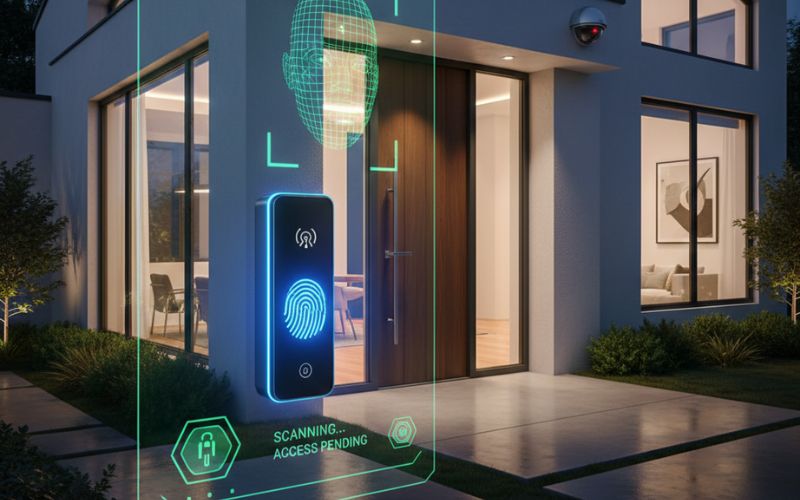
Biometric security systems represent significant advancement over traditional lock-and-key security, providing substantially higher security levels through unique biological characteristics that cannot be easily replicated, stolen, or shared. This technology transforms home security from vulnerable mechanical systems to sophisticated authentication that recognizes legitimate residents while reliably excluding unauthorized individuals.
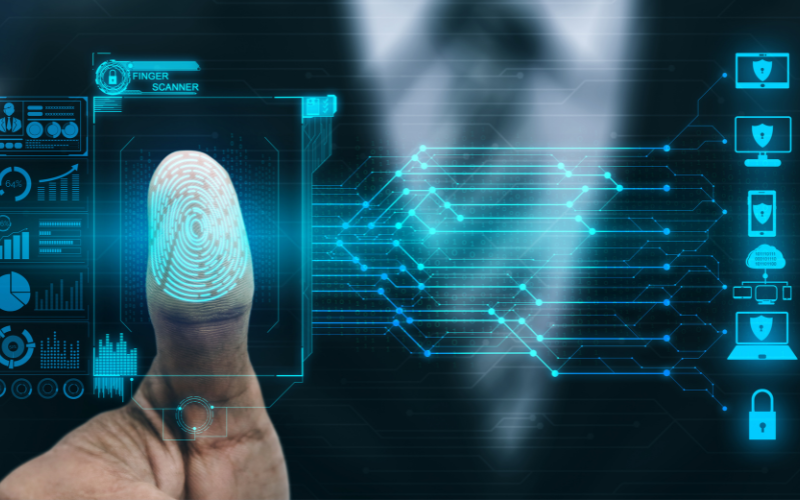
Fingerprint recognition represents the most common biometric home security implementation, offering convenient, reliable access control. Residents simply touch scanners to unlock doors, eliminating keys that can be lost, copied, or stolen. Multiple fingerprints can be registered, allowing family members individual access while maintaining detailed logs of who entered when.
Facial recognition technology adds another security layer, particularly when combined with other authentication methods. Advanced systems recognize registered faces even accounting for aging, glasses, or minor appearance changes while rejecting attempts to fool systems with photographs or videos.
Convenience factors drive biometric security adoption beyond pure security benefits. Never fumbling for keys, granting temporary access to service providers without physical key exchange, and eliminating concerns about lost or stolen keys improve daily life quality substantially. These convenience benefits often matter as much as security improvements to homeowners.
How Do Home Security Systems Protect Residential Properties?
Comprehensive home security systems integrate multiple protection layers including perimeter sensors, motion detectors, glass break sensors, door and window contacts, and surveillance cameras. This layered approach creates redundant protection that maintains security even if individual components fail or are circumvented.
Professional monitoring services provide 24/7 vigilance that homeowners cannot maintain personally. When alarms trigger, monitoring centres immediately contact homeowners and, if necessary, dispatch emergency services. This professional response ensures appropriate action even when homeowners are unavailable, traveling, or unaware of situations.
Deterrence represents often-overlooked security value. Visible security systems including cameras, alarm company yard signs, and window stickers discourage potential intruders who prefer easier targets. Many break-ins are opportunistic rather than planned, and obvious security measures redirect criminals toward unprotected properties.
Smart home integration enables sophisticated automation that enhances both security and convenience. Systems can arm automatically when residents leave, send smartphone alerts when doors open unexpectedly, integrate lighting to simulate occupancy when homes are empty, and provide remote access for checking status or controlling settings from anywhere.
What Benefits Do AMC for Computer Maintenance Contracts Provide?
Annual Maintenance Contracts for computer systems provide predictable, comprehensive support that keeps technology infrastructure running reliably. These contracts typically cover preventive maintenance, repairs, technical support, and sometimes replacement parts, creating single-source solutions for all equipment maintenance needs.
Preventive maintenance included in AMC agreements catches problems before they cause failures. Regular inspections, cleaning, software updates, and performance optimization extend equipment lifespan while reducing unexpected downtime. This proactive approach proves far more cost-effective than reactive repair-only strategies.
Budget predictability represents major AMC advantages. Fixed annual costs eliminate surprises from unexpected repair bills, making technology expense planning straightforward. This predictability benefits financial planning while ensuring funds are available for technology support when needed.
Priority service levels often included in AMC agreements ensure faster response times and resolution when issues arise. Businesses with maintenance contracts typically receive preferential treatment over non-contract customers, reducing downtime impacts on productivity and revenue.
Relationship benefits develop when single providers handle all maintenance through AMC arrangements. Providers familiar with specific infrastructure can diagnose problems faster, recommend improvements proactively, and provide better overall service than unfamiliar technicians encountering systems for the first time.
How Do Wireless Infrastructure Solutions Enable Modern Business Operations?
Wireless infrastructure solutions have transformed from luxury to necessity as mobile devices become primary computing platforms. Modern businesses require robust wireless infrastructure that provides reliable, secure connectivity throughout facilities. Properly designed wireless solutions eliminate dead zones, prevent congestion, and support growing numbers of devices seamlessly.
Wireless network planning requires technical expertise to optimize access point placement, configure channels appropriately, manage interference sources, and ensure adequate capacity for current and future needs. Professional planning prevents common problems like insufficient coverage, inconsistent performance, and security vulnerabilities that plague amateur installations.
Security considerations prove critical in wireless deployments. Unlike wired networks, where physical access control provides inherent security, wireless signals extend beyond building boundaries, creating exposure to unauthorized access attempts. Proper encryption, authentication protocols, and network segmentation protect against threats while maintaining usability.
Guest network capabilities enable providing connectivity to visitors, customers, or temporary workers without compromising internal network security. Separate wireless networks isolate guest traffic from business systems, preventing security breaches while delivering expected connectivity convenience.
Scalability planning ensures wireless infrastructure accommodates growth without requiring complete redesigns. Adding access points, increasing bandwidth, and supporting emerging wireless standards should be straightforward within properly architected systems. This scalability protects infrastructure investments over extended periods.
What Do Managed Network Infrastructure Services Include?
Managed network infrastructure services transfer responsibility for designing, implementing, monitoring, maintaining, and optimizing network systems to specialized providers. This comprehensive approach relieves internal IT teams from network management burdens while ensuring expert attention to critical infrastructure.
Network monitoring services provide constant vigilance that internal teams cannot maintain. Automated systems track performance metrics, detect anomalies, identify potential problems, and alert technicians before issues impact users. This proactive monitoring dramatically reduces downtime while improving overall network reliability.
Configuration management ensures network devices maintain appropriate, secure settings. Regular audits catch configuration drift, unauthorized changes, or security vulnerabilities before they cause problems. Standardized configurations across similar devices simplify troubleshooting while reducing management complexity.
Capacity planning based on usage analysis prevents performance degradation as demands grow. Managed service providers analyze traffic patterns, identify bottlenecks, and recommend upgrades before capacity constraints impact business operations. This forward-looking approach maintains network performance proactively.
Security management represents critical managed service components. Providers implement and maintain firewalls, intrusion detection systems, content filtering, and other security controls. Regular security updates, vulnerability assessments, and threat response ensure networks remain protected against evolving threats.
How Should Businesses Evaluate Technology Rental Providers?
Provider evaluation requires assessing multiple factors beyond just rental rates. Equipment quality, inventory breadth, service responsiveness, contract flexibility, and support capabilities all significantly impact rental experiences and value.
Equipment quality and currency matter tremendously. Providers offering newer, well-maintained equipment deliver better value than those renting older, unreliable systems. Inspecting sample equipment, asking about average equipment age, and checking specifications ensure rented technology meets requirements.
Inventory breadth determines whether providers can fulfill complete requirements through single sources. Providers offering diverse equipment including laptops, desktops, monitors, peripherals, networking gear, and accessories simplify logistics while potentially offering volume discounts.
Contract flexibility around rental durations, upgrade options, quantity adjustments, and early termination provisions indicates customer-friendly providers. Rigid contracts that penalize changes reflect provider-centric rather than customer-centric orientations.
Support and service capabilities, including delivery, setup assistance, technical support, maintenance, and replacement policies, directly impact operational efficiency. Responsive support that minimizes downtime delivers value beyond base rental costs.
What Security Considerations Apply to Rented Computer Equipment?
Data security concerns arise when using rented equipment that previously served other customers and will serve future users after current rentals end. Proper data handling protocols protect sensitive information from unauthorized access through previous residual data or inadequate sanitization between rentals.
Data encryption on rented systems protects information even if equipment is lost, stolen, or inadequately sanitized. Full disk encryption ensures data remains protected regardless of what happens to physical devices. This encryption should be standard practice on all business computers, owned or rented.
Data removal before returning equipment requires thorough sanitization that removes all business information. Simple file deletion proves inadequate; proper data destruction through overwriting or encryption key destruction ensures information cannot be recovered after equipment return.
Provider sanitization procedures between rentals should be verified. Reputable providers follow documented procedures to completely erase previous user data before deploying equipment to new customers. Asking about these procedures and requesting documentation demonstrates provider professionalism.
Network security policies should apply equally to rented and owned equipment. Firewalls, antivirus software, access controls, and monitoring don’t distinguish between equipment ownership status. Rented equipment must meet all security requirements before connecting to business networks.
How Can Businesses Optimize Their Technology Infrastructure Investment?
Strategic technology infrastructure planning balances current needs with future growth requirements, ownership versus rental decisions, in-house versus outsourced management, and cost optimization with performance requirements. This balanced approach maximizes value while maintaining necessary capabilities.
Total cost of ownership analysis comparing purchase, lease, and rental options reveals true costs beyond sticker prices. Ownership includes purchase price plus maintenance, insurance, depreciation, and disposal costs. Rentals include rental fees but eliminate many ownership costs. Comprehensive analysis reveals actual cost differences.
Hybrid approaches combining owned and rented equipment often provide optimal solutions. Core infrastructure purchased for long-term use combines with rented equipment for variable or short-term needs. This hybrid model provides stability while maintaining flexibility.
Regular infrastructure assessments identify obsolete equipment, underutilized resources, performance bottlenecks, security vulnerabilities, and optimization opportunities. These assessments inform decisions about refreshing, consolidating, or eliminating equipment, ensuring infrastructure remains aligned with business needs.
Vendor relationship management across equipment suppliers, service providers, and technology consultants creates ecosystems that support business objectives. Strong vendor relationships improve service quality, provide access to expertise, and sometimes yield preferential pricing or terms.
What Future Trends Are Shaping Business Technology Infrastructure?
Cloud computing continues displacing local infrastructure for many applications. Software as a Service eliminates software installation and maintenance, Infrastructure as a Service provides computing resources without physical equipment, and Platform as a Service enables development without infrastructure management. These cloud models reduce local infrastructure requirements dramatically.
Internet of Things devices proliferate across business environments, creating monitoring, automation, and optimization opportunities. However, IoT devices also increase network load and create security challenges that infrastructure must accommodate.
Artificial intelligence and machine learning applications demand substantial computing power that many businesses cannot justify purchasing. Cloud-based AI services and rented high-performance computing provide access to capabilities that ownership cannot economically deliver.
5G wireless technology promises dramatically improved mobile connectivity that may reduce the importance of some applications. Understanding 5G implications helps plan infrastructure investments appropriately.
Cybersecurity threats continue evolving, requiring constant infrastructure updates to maintain protection. Managed security services provide expertise and resources that few businesses can develop internally, making outsourced security increasingly attractive.
Conclusion
Technology infrastructure decisions significantly impact business operations, costs, and capabilities. Equipment rental options provide flexibility, financial advantages, and reduced administrative burdens that traditional ownership cannot match for many scenarios. Combined with professional services for security, maintenance, and network management, rental approaches enable businesses to maintain current, reliable infrastructure without overwhelming capital investments or management burdens.
For businesses seeking comprehensive technology solutions, Emdee offers laptop rentals, desktops and laptops rentals, biometric home security systems, home security security systems, AMC for computer maintenance, wireless infrastructure solutions, and managed network infrastructure services. With expertise spanning equipment provision and technology services, Emdee provides integrated solutions that keep businesses running efficiently while controlling costs and complexity.
Modern business technology requirements demand flexible, cost-effective approaches that provide reliable infrastructure without unsustainable capital investments. Rental models for laptops and desktops, combined with professional services for security, maintenance, and network management, deliver comprehensive solutions that scale with business needs. These approaches enable organizations to focus on core competencies while ensuring technology infrastructure remains current, secure, and optimally configured.
Emdee delivers complete technology infrastructure solutions including laptop rentals, desktops and laptops rentals, biometric home security systems, home security security systems, AMC for computer maintenance, wireless infrastructure solutions, and managed network infrastructure services. By partnering with Emdee, businesses gain access to quality equipment and expert services that support their operations reliably and cost-effectively, enabling them to concentrate on business success rather than technology management challenges.