The Transformation of Enterprise IT Security Solutions
With today’s networked digital world, cybersecurity has moved from being a technical issue left to IT organizations to be a business-critical priority impacting strategic planning, risk management, and operational decision-making at the top organizational level. The rapid growth of digital transformation, remote work implementation, and cloud technology reliance has grown the cyber threat environment exponentially, presenting vulnerabilities that are actively exploited by sophisticated actors. Organizations in this multifaceted threat environment need effective IT security solutions that manage changing threats while supporting business operations and digital innovation. This in-depth study looks at the present situation of enterprise cybersecurity, the risks that organizations encounter, and the countermeasures innovative companies adopt to secure important assets and ensure business continuity.
Comprehensive IT Security Solutions Framework
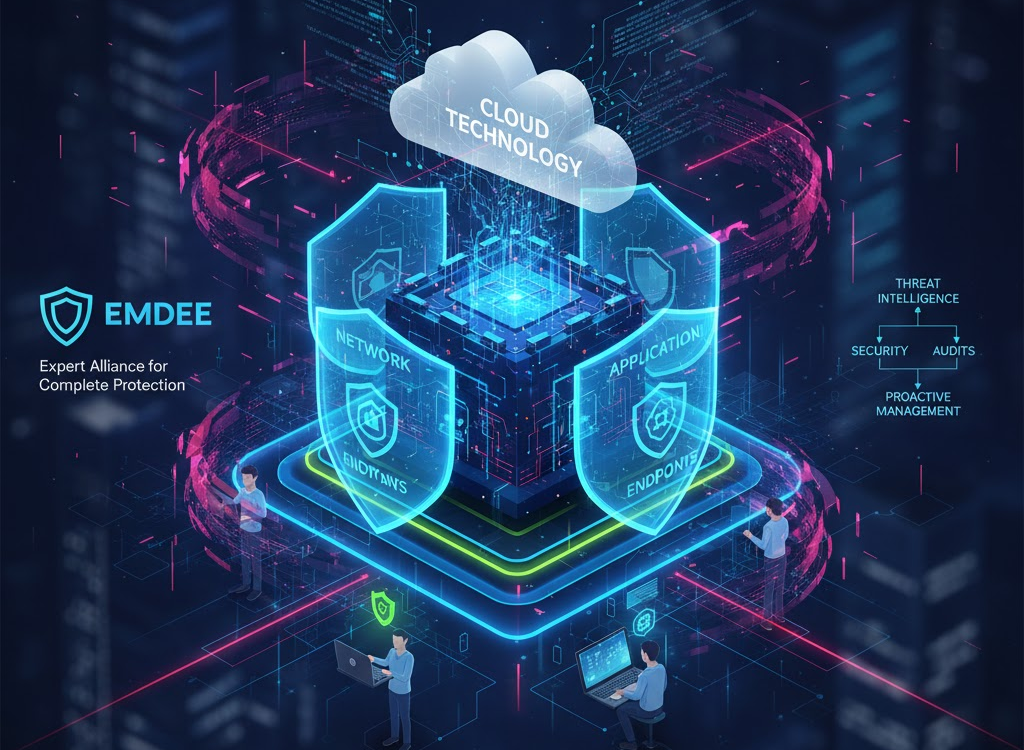
The sophistication of today’s IT infrastructure calls for complete security frameworks that cover threats on multiple fronts such as networks, applications, data, and endpoints. Companies that have disconnected security strategies and point solutions tend to realize that holes between solutions provide weaknesses that are targeted by attackers. IT security solutions that combine several security elements into unified systems wherein various components work together to generate layered protection ensure that even if the attackers breach one layer of security, the remaining layers are still available to discover, control, and react to threats.
Organizations that perform routine security audits are aware of their security stance and can prioritize investment based on the most important vulnerabilities.
Implementing IT security solutions demands specialist knowledge not usually present within many organizations. Security solution vendors possess extensive knowledge of threat environments, attack methods, emerging threats, and countering measures that are learned through ongoing observation and analysis. Vendors know how various security components integrate and cooperate with each other to provide holistic protection. They possess certifications that prove technical proficiency and keep abreast of changing threats and solutions through ongoing professional development. Organizations that enter into agreements with effective security providers can utilize access to expertise that would be prohibitively costly or impossible to develop completely in-house.
IT Security Managed Services for Enterprise Operations
Managed IT security services are increasingly common methods that allow organizations to outsource security operations to specialist providers while being able to stay focused on core business operations. Managed security service providers are responsible for monitoring organization networks, examining security events, detecting threats, and responding to incidents on their customers’ behalf. This outsourcing allows organizations to enjoy professional security monitoring and incident response without having to keep the costly in-house security operation centers.
The worth of managed security services goes beyond detection and response to include security patches, patch management, and vulnerability fix. This proactive management of vulnerabilities keeps attackers from exploiting known vulnerabilities that technically savvy organizations should have fixed.
Managed security services also offer threat intelligence that guides organizational security policies. Security service providers track global threat environments, recognize new attack patterns, and make this applicable intelligence available to customers. This intelligence allows organizations to gain insight into threats facing their businesses and put countermeasures in place before attacks. Organizations that use threat intelligence have competitive edges in threat awareness over those using only local monitoring.
IT Security Management Services and Strategic Implementation
Strategic IT security management solutions extend beyond operational oversight to include security program creation, policy development, and organizational change management. Security consultants collaborate with organizational senior management to create end-to-end security strategies in support of business goals and risk appetite. These strategies set organizational security posture, determine governance, and outline investments needed to attain security goals. Strategic security management ensures that security projects enhance and do not impede business operations.
IT security management services involve creating security policies, procedures, and standards that outline how organizations manage security throughout all operations.
Security awareness training is an essential part of strong IT security management. Studies repeatedly show that people are organizational security’s weakest link, with employees unknowingly facilitating attacks by clicking on phishing emails, using weak passwords, or disclosing sensitive data. Strong security awareness programs teach employees about prevalent threats, good security practice, and their contributions to organizational security. Companies that invest in security awareness training have much lower rates of successful social engineering attacks and improved incident response participation.
IT Security Solutions for Small to Mid-Sized Businesses
Small and medium-sized businesses present special security issues in which constrained budgets need to be able to tackle advanced threats aimed at their size class. Attackers tend to target smaller organizations assuming their defenses are less robust than those of large businesses. Advanced security solutions available only to enterprises until now have reached smaller organizations through cloud-based solutions and managed solutions. Democratization of security through these means allows smaller organizations to apply enterprise-class security even with budgetary constraints.
Rolling out IT security solutions to small and mid-size businesses calls for prioritization that targets highest-impact within budget limits. Instead of trying in-depth solutions that go beyond budgets, organizations select key assets in need of protection and roll out solutions addressing the highest-priority risks. This risk-based strategy allows smaller organizations to roll out meaningful security with constrained resources. Security prioritization choices must align with organizational risk tolerance and asset criticality.
Cloud security solutions deliver specific value for smaller and medium businesses without infrastructure experience or funds for big technology investments. Cloud security vendors own infrastructure in which customers use the internet to connect with security services without local hardware. This removes capital investments in hardware while allowing quick deployment and simple scalability. Companies can add security features as business increases without substantial infrastructure growth.
Managed security services are especially worth it for small and mid-sized businesses with no full-time security personnel. Outsourcing incident response and security monitoring to managed service providers offers 24/7 monitoring and skilled response capability that businesses cannot support internally. This outsourcing allows executives of small companies to concentrate on core business functions while having faith in security monitoring and incident response.
Enterprise Solutions for Large-Scale IT Security
Enterprise organizations pose special security challenges due to multifaceted IT infrastructures, large data inventories, large employee bases, and high-profile status that targets them as well-funded attackers’ objectives. Enterprise IT security solutions need to overcome this complexity while delivering operational effectiveness to geographically dispersed organizations. Enterprise security deployments consolidate multiple security tools, coordinate across many locations, and employ exhaustive governance models.
Enterprise security architecture has many associated components that are interconnected such as network security, endpoint security, application security, data loss prevention, security information and event management, and identity access management. All of these components handle definite security domains while communicating with other components to deliver layered security. Complexity in bringing all of these components together demands highly evolved security architecture created by skilled professionals. Organizations that do not properly design security architecture end up having gaps in which security components do not cooperate with each other effectively.
Identity and access management is a key security element within enterprise settings where thousands of workers need to have different levels of system access.
Enterprise security governance creates organizational frameworks, assigns tasks, and enforces responsibility for security performance.
Strong security governance guarantees security choices receive executive sponsorship and organization resources essential for effective execution.
IT Security Solutions Company Services and Capabilities
Specialized IT security firms integrate extensive technical knowledge, industry expertise, and continuous research into holistic service portfolios for meeting varied organizational security requirements. These firms employ staff of certified security experts with experience in a variety of security disciplines such as network security, application security, cloud security, and incident response. Their service portfolios include assessment and consulting, managed services, technology solutions, and incident response capabilities.
Technology solutions offered by security vendors include security products, platforms, and systems that an organization implements in order to safeguard assets. The technology solutions vary from point solutions for a single security function to integrated platforms combining several security capabilities. Security vendors have the expertise to suggest suitable solutions that align with organizational requirements and budgets. Technology choice is a critical driver of security effectiveness and operational efficiency and hence expert advice becomes worthwhile.
Enterprise Solutions and IT Security for Overall Protection
Advanced enterprise security solutions combine several capabilities into synchronized systems offering multi-layered protection. Top security vendors understand that security across business domains such as technology infrastructure, physical locations, people, and business processes must be addressed to effectively have enterprise security. Unified solutions respond to these varied security requirements through coordinated strategies instead of independent point solutions. Organizations implementing advanced enterprise security solutions have much less breach risk than those with disjointed security strategies.
Enterprise security products need to adapt on an ongoing basis as threat environments shift and attackers refine their tactics. Threat providers have live threat intelligence programs tracking global attack patterns, detecting emerging threats, and gaining insight into attacker techniques. Security is informed by this intelligence, and organizations can institute countermeasures ahead of threats growing. Organizations that have timely threat knowledge deploy effective precautions while those with stale threat knowledge discover too late that current defenses are ineffective.
The security leadership function in enterprise security goes beyond technology to include culture transformation, process, and organizational alignment. Security leaders have to articulate security risks and benefits to executive leadership, create security awareness among employees, and link security to business processes. This leadership function involves business aptitude in addition to technical competence. Security leaders who are well versed in business goals and issues achieve organizational support for security programs more than those that are technically oriented.
Conclusion : Complete Protection Through Expert Alliance
Enterprise security in the current threat landscape requires complete solutions combining various protection layers, expert monitoring, and ongoing improvement. Emdee combines strong expertise in IT security management and enterprise solutions to offer organizations complete protection that handles changing threats. With a proven track record in the implementation of enterprise-scale security solutions, Emdee assists organizations in building security postures safeguarding key assets while allowing business operations and digital innovation. The firm’s dedication to threat intelligence, ongoing security innovation, and professional-level incident response ensures organizational security is strong against advanced attackers. The integration of managed security services with strategic consulting and enterprise solutions gives Emdee the best-in-class protection organizations must have to conduct business securely in the sophisticated threat landscape of today.