Change is moving fast across every kind of company now, opening new paths to grow, save time, and move more quickly. Still, that shift brings bigger dangers online – attacks evolve constantly, becoming harder to stop. Smaller firms face a tough spot: they rely heavily on tech just to run things but rarely have the strong defences, skilled staff, or deep pockets that big players do. Their need to stay connected makes them vulnerable in ways others can better handle.
Back then, a virus might ride in on a floppy disk. Now things move differently. Protection once meant basic firewalls. That does not stop today’s attacks. Criminals use stealthy methods that linger undetected. Some lock systems require payment to arrive. Others rent out their malware online. Tricking people plays a big part, too. Hidden flaws unknown to vendors get used fast. Old defences fail against these moves. Crime operates like a hidden market now. Data gets bought and sold openly among bad actors. Tools for breaking in are ready for buyers willing to misuse them.
Now here’s a twist: the number of ways hackers can break in has grown fast. Think cloud systems, phones, smart gadgets, working from home, linked suppliers – each opens a door someone could misuse. New tools help companies work better, yet they also bring hidden risks needing close checks. It is not about avoiding tech changes – it is about handling them without weakening safety.
Understanding IT Security Solutions in a Modern Context
IT security solutions encompass the technologies, processes, and practices organizations implement to protect information assets from unauthorized access, use, disclosure, disruption, modification, or destruction. This protection extends across multiple domains including network security, endpoint security, application security, data security, identity and access management, and security monitoring. Comprehensive security requires addressing each domain while ensuring solutions work cohesively rather than creating isolated security silos.
What you protect shapes how strong your defenses need to be. Knowing weak spots comes before guessing dangers. Some risks matter more because they hit harder or happen more often. Spending money without knowing real dangers means wasting it on wrong fixes. When companies ignore this, their safeguards crumble under actual attacks.
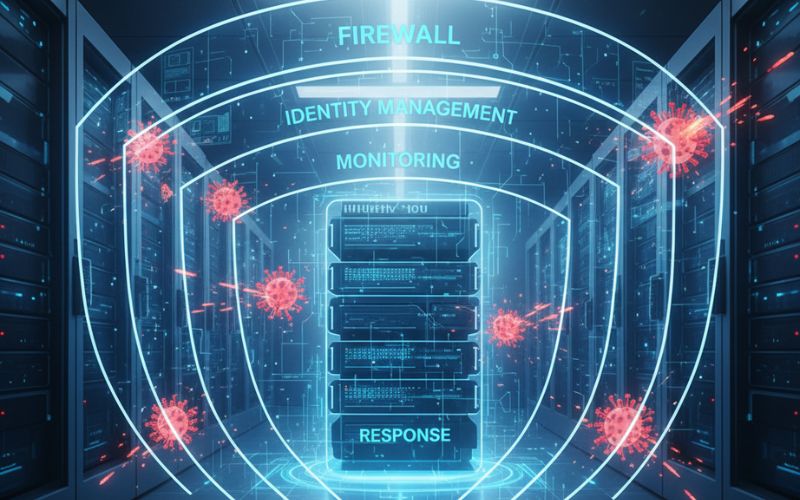
One layer of defense can fail. So stacking different protections means trouble gets caught more than once. When a breach slips past one barrier, others jump into action right away. Protection works better when it stops threats ahead of time, spots them if they get through, then fixes what was harmed. Safety grows stronger because each piece plays its own role without relying on just one solution.
Out of yesterday’s basic safeguards came today’s smart defenses – those using AI, pattern recognition, learning algorithms. Blocking familiar dangers isn’t enough anymore; spotting odd behavior matters just as much. Because attackers keep inventing fresh tricks, old-style code-matching often fails. Stopping what we know is only half the job. Uncovering what we haven’t seen? That’s where protection really begins.
When tools work together, they perform better yet simplify daily tasks. Data streams flow into SIEMs from various places, linking incidents to reveal hidden trends one tool alone would overlook. SOAR setups manage actions between separate technologies, cutting delays while keeping rules steady across environments. What once felt like scattered fixes becomes a unified defense through connection.
The Critical Role of IT Security Managed Services
IT security managed services provide organizations with access to security expertise, technologies, and processes through third-party providers. This delivery model addresses a fundamental challenge facing many organizations: the difficulty of building and maintaining in-house security capabilities amid talent shortages, rapidly evolving threats, and constantly changing technologies. Managed security service providers (MSSPs) offer security as an ongoing service rather than a one-time product implementation.
Now here’s something few consider – what one company calls full protection another sees as bare minimum. Some stick to just guarding entry points, installing digital shields against known dangers. Others go further: eyes open at all times, hunting hidden risks before they strike, ready to react when things break. A few track weaknesses, follow rules, ask experts how to stay safe. Many split the work – handle part themselves, hand rest to outsiders. Depends on who they trust, what they fear most.
A watchful team keeps an eye on digital activity day and night, spotting odd behavior in networks, machines, software. When alarms go off from detection tools, trained people step in, checking if something is wrong, acting fast once danger shows up. Staying alert like this all the time? Tough for many offices to pull off themselves – especially those without big budgets or round-the-clock staff. Instead, outside experts handle it collectively, sharing resources so each customer pays less.
Starting off differently each time keeps things fresh. Fresh insights come from watching how hackers operate lately. Some of these details tie directly to certain tech systems or business fields. Data pours in from many spots – customer networks, expert forums, paid feeds. One piece builds on another without using predictable links. Settings get adjusted because warnings arrive early. Not waiting until damage happens makes a difference later. Protection shifts ahead of danger instead of lagging behind it.
Mistakes happen, even with strong defenses – when they do, quick help matters most. When alarms sound, specialists jump in to trace how intruders got inside, then lock things down before more harm spreads. They cut off remote entry points used by hackers, helping systems return to usual function. Working across many companies, these experts see patterns others may miss. The longer it takes to react, the deeper trouble can grow – hidden movement within networks opens doors to stolen files and long-term holdouts.
Meeting rules about safety and privacy gets easier when companies have guidance. Since strict laws cover how data must be handled, breaking them brings heavy fines. Experts who know these legal structures assist firms by setting up necessary safeguards, recording their actions, and leaving proof of care. Smaller groups benefit most, often missing internal teams focused on rule adherence.
Implementing IT Security Management Services
IT security management services provide strategic oversight and governance of security programs rather than focusing solely on tactical execution. These services help organizations develop security strategies aligned with business objectives, establish security policies and procedures, manage security investments, and measure security program effectiveness. Management services address the question of not just what security controls to implement but how to build comprehensive programs that mature over time.
Ahead of any tools or policies, someone has to decide who decides. When it comes to security, that means spelling out which people handle what – and why they’re the ones doing it. Without those lines drawn, effort spreads thin, efforts overlap, or worse – no one steps up when needed. Leadership stays involved only if their role is spelled out early. Money follows meaning: funds go where priorities are clear. Attention from the top doesn’t happen by accident – it’s built into structure.
Conclusion
The imperative for robust IT security solutions has never been clearer as organizations face escalating threats in increasingly complex technology environments. From small businesses to large enterprises, every organization must prioritize protecting digital assets, customer data, and operational continuity against determined adversaries. The question isn’t whether to invest in security but how to build comprehensive security programs appropriate to specific circumstances and risk profiles.
IT security managed services provide practical pathways for organizations to access expertise, technologies, and processes that might otherwise remain out of reach. Managed services democratize enterprise-grade security, making sophisticated capabilities available to organizations of all sizes. By leveraging economies of scale and specialized expertise, managed services deliver security effectiveness that most organizations cannot achieve independently. The key lies in selecting providers that understand organizational contexts and deliver services aligned with actual needs.
IT security management services address strategic dimensions of security beyond tactical tool deployment. Building mature security programs requires governance frameworks, clear policies, risk management processes, and metrics that demonstrate effectiveness. Management services help organizations develop these program elements while continually improving security posture over time. Security maturity isn’t achieved in single implementations but through sustained commitment to improvement.
IT security solutions for small and mid sized companies must acknowledge unique constraints and requirements of smaller organizations. Solutions designed for enterprises often prove impractical for smaller companies with limited resources. Appropriately scaled solutions that prioritize highest risks, leverage cloud services, and emphasize usability enable smaller organizations to achieve strong security without requiring enterprise resources. The focus should be on practical, effective security rather than aspiring to enterprise capabilities that aren’t achievable or necessary.
Comprehensive IT and security solutions recognize that security integrates throughout technology stacks rather than operating as separate function. Network security, endpoint protection, application security, data protection, and identity management must work cohesively. Integrated approaches reduce complexity while improving effectiveness, creating security ecosystems that adapt to evolving threats and business requirements.
For organizations seeking IT security solutions company partnerships, careful evaluation ensures selecting providers capable of delivering value beyond technology implementation. The best partnerships combine technical expertise with strategic thinking, proactive approach, and collaborative culture. These relationships extend beyond vendor-customer transactions to become trusted advisor relationships where security partners contribute meaningfully to organizational success.
Enterprise solutions for IT & security address unique challenges of large, complex organizations operating at scale. These solutions combine advanced technologies, mature processes, and specialized expertise to protect valuable assets against sophisticated threats. Enterprise security requires architectural thinking, automation, threat intelligence, and continuous improvement. Investment in enterprise-grade capabilities reflects organizational recognition that security isn’t optional but essential for business success and resilience.
Emdee stands as a trusted partner for organizations seeking comprehensive IT security solutions across the full spectrum from small and mid-sized companies to large enterprises. With deep expertise in IT security managed services and IT security management services, Emdee provides both tactical execution and strategic guidance that elevates organizational security posture. As an IT security solutions company with proven capabilities in delivering IT and security solutions, Emdee combines technical excellence with business understanding, ensuring security programs support rather than hinder business objectives.