But not all security setups deliver that confidence. Many people install a couple of cameras, point them vaguely at their front door, and call it done — only to discover during an incident that the footage was blurry, the camera had been out of range of the Wi-Fi, or the recording had stopped days earlier without anyone noticing. The gap between having a CCTV camera and having a CCTV system that actually works is wider than most people realize.
Why Has Demand for Home Security Cameras Grown So Dramatically?
The growth of the home security camera market over the past decade reflects a broader shift in how people think about safety. Several factors have converged to drive this change.
Technology has become dramatically better and dramatically cheaper. Cameras that would have cost thousands of dollars a decade ago — with high resolution, night vision, motion detection, and remote viewing capabilities — now cost a fraction of that. The hardware has improved while the price has dropped, making professional-grade security accessible to ordinary homeowners.
At the same time, smartphone connectivity has transformed the user experience. The ability to check a live feed from anywhere in the world, receive instant alerts when motion is detected, and review footage remotely has made home security cameras far more useful than they were in the era of DVR systems that required someone to physically sit down and review hours of tape.
And crime patterns have changed. Package theft, vehicle break-ins, and residential burglaries have become more common in many urban and suburban areas, creating a practical demand for better surveillance that goes beyond fear and into everyday prevention.
What Makes Wireless Security Cameras Different from Traditional Wired Systems?
For many years, the standard in professional security installation was wired — cameras connected by cables to a central recording unit, powered by wiring run through walls and ceilings. Wired systems have real advantages: they are typically more reliable, less susceptible to interference, and do not depend on battery life or Wi-Fi connectivity.
But wireless security cameras have closed the gap considerably, and for most residential and small commercial applications, they now offer a compelling combination of performance and convenience.
The most obvious advantage of wireless security cameras is installation flexibility. Without the need to run cables, cameras can be placed virtually anywhere — on the side of a building, in a corner of a ceiling, under an eave, in a location that would be impractical to wire. This flexibility allows for much better camera placement, which is one of the most important factors in effective surveillance.
Wireless cameras are also easier to relocate. If a homeowner decides that the camera covering the back garden would be more useful covering the driveway, the change can be made in minutes rather than requiring a professional installer to reroute cables. That adaptability is genuinely valuable as security needs evolve.
How Should Outdoor Security Cameras Be Selected and Placed?
Outdoor environments are significantly more demanding than indoor ones for security cameras. Rain, dust, temperature extremes, direct sunlight, and the challenges of low-light nighttime conditions all create requirements that indoor cameras do not face.
When selecting outdoor security cameras, the most important technical consideration after resolution is the camera’s weatherproofing rating. IP ratings — Ingress Protection ratings — indicate how well a device is protected against dust and water. A camera rated IP65 or higher is suitable for most outdoor applications, though for extremely wet or dusty environments, higher ratings are preferable.
Night vision is another critical factor for outdoor cameras. Most outdoor security incidents happen at night or in low-light conditions. Cameras with infrared night vision can capture clear footage in complete darkness, while cameras with colour night vision can capture colour footage in low-light conditions using ambient light amplification. For areas with some ambient lighting — parking lots, driveways with streetlights — colour night-vision cameras can provide significantly more useful footage than infrared-only systems.
Camera placement is as important as camera selection. Outdoor cameras should cover all entry points to a property — doors, gates, garage entrances, and accessible windows. They should be positioned high enough to be difficult to tamper with but low enough to capture recognizable facial images. Coverage overlap between cameras ensures that there are no blind spots that an intruder could exploit.
What Is the Advantage of a Wireless Security Camera System Over Individual Cameras?
There is a meaningful difference between having several independent cameras installed at different points around a property and having a true wireless security camera system. The difference lies in integration.
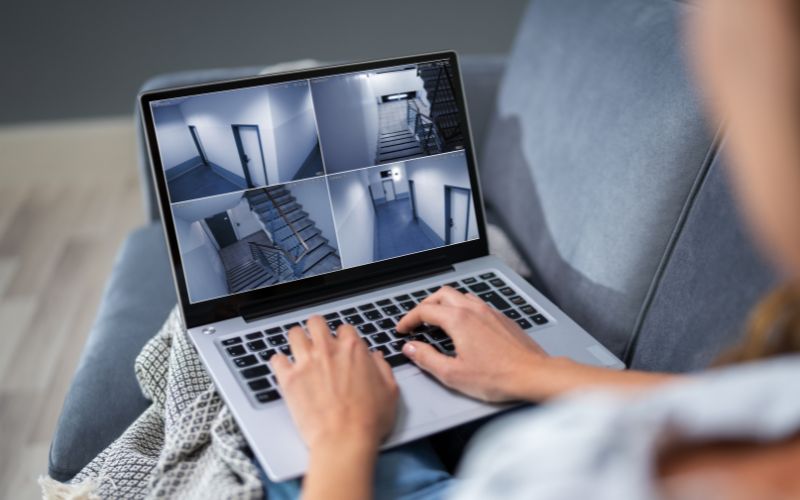
A security camera system connects multiple cameras to a single management platform — whether that is a cloud service, a local network video recorder, or a hybrid of both. This integration provides several advantages that individual cameras cannot offer.
First, centralized management makes it far easier to monitor and review footage. Rather than checking multiple apps or accessing multiple cameras individually, a system allows all feeds to be viewed from a single interface. This is particularly important in commercial applications where many cameras may be in operation simultaneously.
Second, a system typically offers more sophisticated recording and storage management. Individual cameras often rely on local memory cards with limited capacity. A system with centralized recording can maintain footage for weeks or months, with automatic overwriting of older footage, which is far more useful in the event of an incident that may not be noticed immediately.
Third, a system can incorporate other security elements — alarms, sensors, access control systems — into a unified platform, creating a genuinely comprehensive security infrastructure rather than a collection of disconnected gadgets.
How Are Modern CCTV Systems Different from What People Remember?
The image most people carry of CCTV systems comes from television — grainy black and white footage, barely identifiable figures moving through a frame. That image is several decades out of date. Modern CCTV systems are capable of capturing footage at resolutions that make facial recognition from significant distances entirely feasible. They offer color imaging, two-way audio, intelligent motion detection that distinguishes between people, vehicles, and animals, and integration with AI-powered analytics that can generate alerts for specific behaviors.
For businesses, modern CCTV systems offer capabilities that go well beyond simple recording. They can provide real-time occupancy monitoring, generate heat maps of customer movement through a space, trigger alerts when specific zones are entered outside of permitted hours, and integrate with access control systems to correlate camera footage with badge-in records.
For homeowners, the advances are equally meaningful. Smart CCTV systems can send alerts to smartphones when a familiar face is recognized, distinguish between a family member and an unknown visitor, and integrate with smart locks and lighting systems to create an automated response to detected activity.
What Should Someone Look for When Choosing a CCTV Camera Provider?
Choosing a CCTV camera or system is not a purchase that should be driven primarily by price. Security infrastructure is not like most consumer electronics, where a cheaper option provides eighty percent of the value of an expensive one. The performance gap between well-engineered security equipment and budget alternatives can be dramatic — and the cost of that gap is measured not in inconvenience but in genuine safety outcomes.
A reputable provider will conduct a proper site survey before recommending equipment. They will assess the specific risks and vulnerabilities of the property, identify the best camera positions, evaluate lighting conditions, and recommend equipment specifications based on actual requirements rather than off-the-shelf packages.
They will also provide professional installation, which matters more than many buyers expect. A poorly installed camera — one that is mounted at the wrong angle, calibrated incorrectly, or connected to a system that has not been properly configured — will underperform regardless of how good the hardware is. And they will provide ongoing support, because security systems require maintenance to keep performing reliably.
Conclusion
For homeowners and businesses in search of a CCTV and security camera solution they can genuinely trust, Emdee brings the expertise, the product range, and the professional installation capability to make that trust well-founded. From wireless security cameras for residential applications to comprehensive CCTV systems for commercial properties, Emdee’s approach combines the right technology with the right placement and configuration to create security infrastructure that actually works when it matters most.